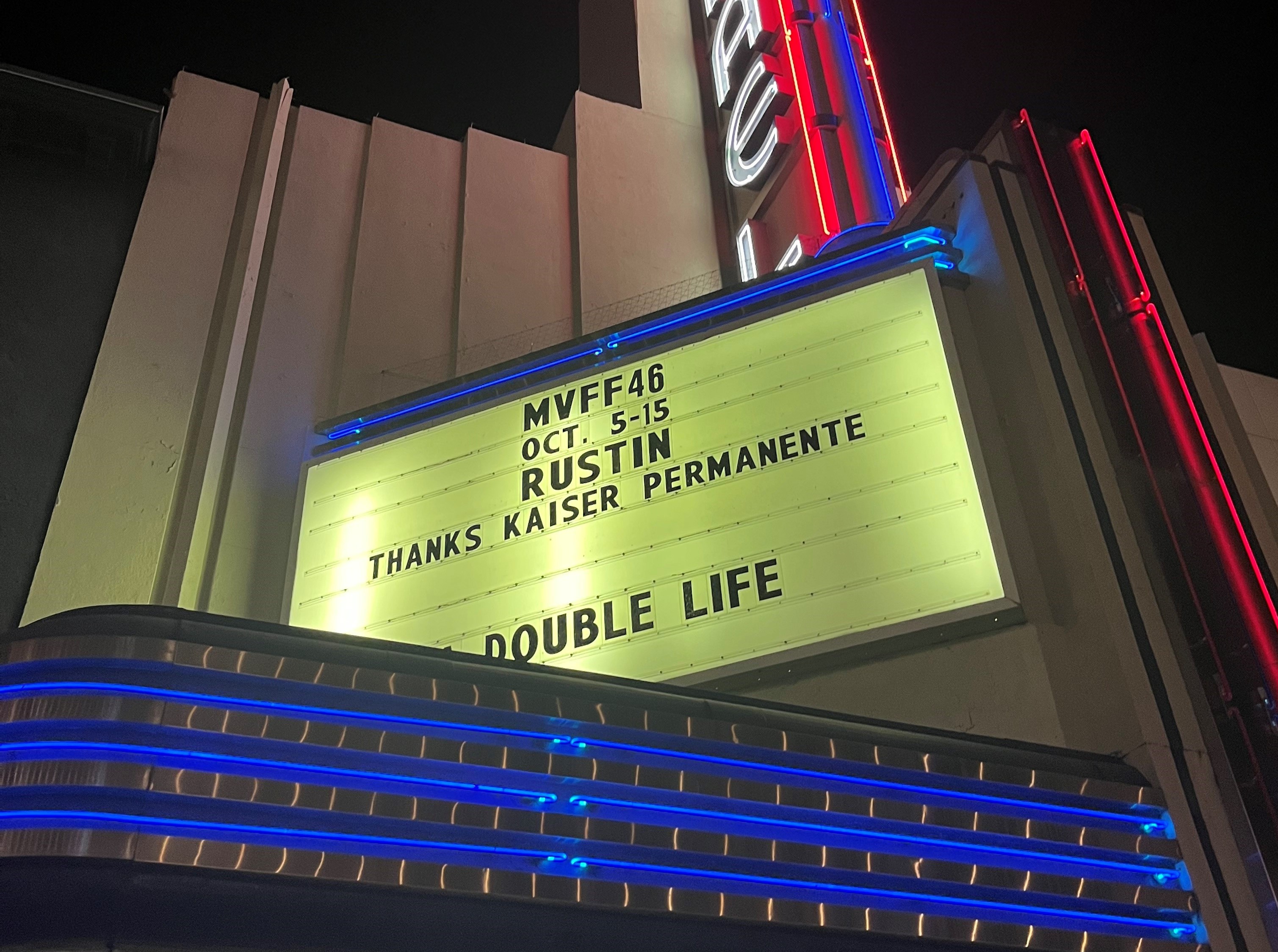
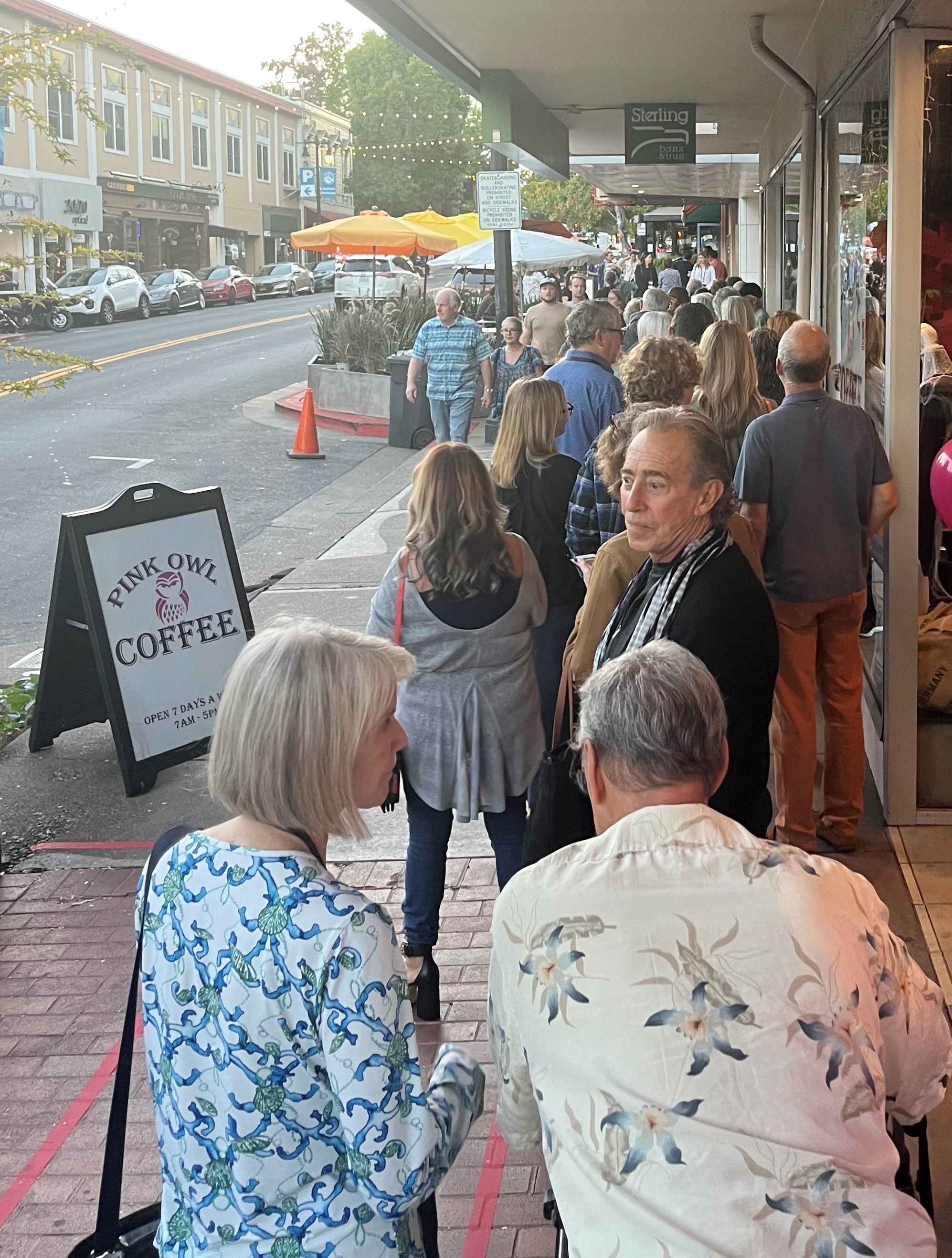
When you spend a lot of time at a film festival, you tend to adopt certain games to play while waiting for the next film to start. For example, at the annual Mill Valley Film Festival, which concludes its 10-day-run on Sunday, Oct. 15, there is a trailer that is shown before every screening, jammed and crammed with short clips froms most of the 149 films featured during the festival. The game is to silently identify and count off the clips from films you’ve already seen that year. Another game is to try, from reading the names on the badges that many package-holding participants wear, to memorize as many names as possible so you can greet them in the pre-show line when you see them again.
But one of the most entertaining games an attendee can play at the annual Mill Valley Film Festival is simply predicting the programmers’ success at selecting films that will end up with Oscar nominations. There are generally quite a few. For studios positioning their films for maximum Academy attention-grapbbing potential, MVFF is strategically positioned at the very end of the festival season, in which films that have yet to be theatrically released are given a chance to build buzz and excitement on their way to their cinematic opening night. So by the time a certain caliber of film hits the screens at the local festival, chances are it’s already considered a contender for at least a few Oscar nominations.
What’s fun, for attendees of the festival, is making guesses about which of these films will end up with Oscar nominations when they are announced in January. MVFF has a fairly good record of screening films that eventually end up as Best Film nominees. Last year, of the 10 films nominated, three were nominated for best film (The Banshees of Inisherin, Tar, and Women Talking) and The Whale, which screened with a live tribute to star Brendan Fraser, who ended up snagging the Best Actor Oscar, along with other nominations. In 2021, of the eight films nominated for Best Picture by the Academy, three of them screened at the MVFF: Dune, Belfast and Power of the Dog. In 2020, a year in which the only live screenings were of the drive-in variety due to the pandemic, Nomadland screened outdoors at the Civic Center lagoon in San Rafael, and ultimately won for Best Film and Best Director.
Like I said, the MVFF seems to be an effective late-in-the-season final-push springboard for Oscar attention. That’s probably why Netflix — increasingly hungry for Oscar cred over the last few years — often makes its highest profile titles available for screenings at the annual October film showcase.
This year, three of the most talked about films at the festival are Netflix produced, with theatrical releases scheduled between now and the middle of November, and with international streaming dates on the network set between now and the first of December. Nyad, which screened on Friday, Oct. 13 at the Sequoia Theater in Mill Valley, will be released in certain theaters on October 20 before streaming on Netflix on November 3. The biopic Rustin will be released in select theaters on November 3, and will premiere worldwide on Netflix on November 17, and Todd Haynes’ May December will be released in theaters on Nov. 17 and streams on Netflix in the U.S. on Dec. 1.
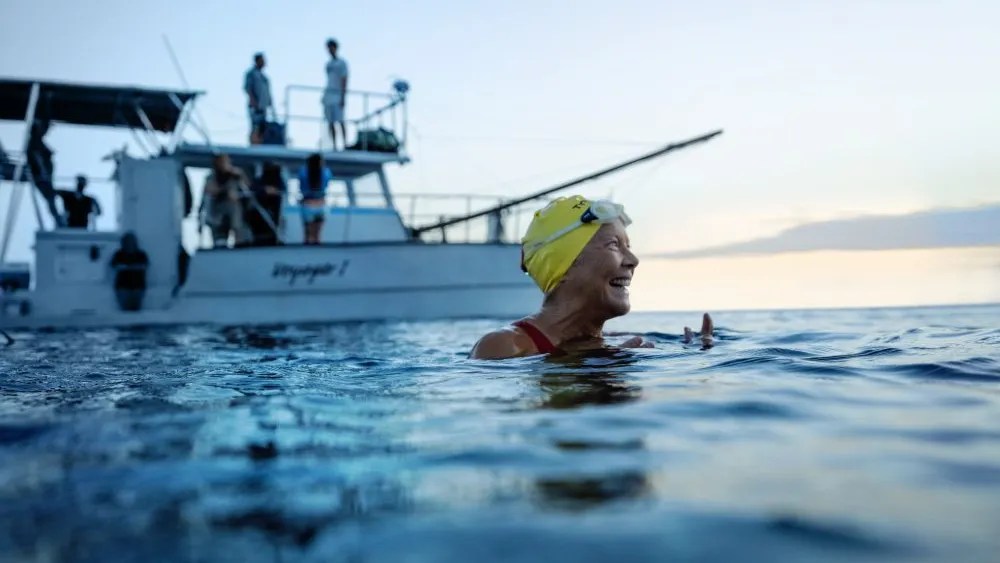
Nyad, directed by Jimmy Chin and Elizabeth Chai Vaserhelyi (Free Solo, Wildlife, The Rescue), stars Annette Bening as real life long-distance swimmer Diana Nyad, who successfully swam from Cuba to Key West, Florida at the age of 64, having failed during four previous attempts. The film — the directors’ first narrative effort after an award-winning career of documentary features — details Nayad’s numerous attempts and setbacks, supported and coached by her friend Bonnie Stoll, played by Jody Foster.
It’s no easy feat to tell a story when everyone knows the ending, but as Chin and Vaserhelyi have done while covering rockclimbers and underwater cave-divers, by focusing on the intricate details — in this case the training, the planning, the ocean current science, the shark-aversion technology, the anti-jellyfish swimsuit and face mask — the pull off a kind of cinematic misdirection, dazzling the audience with such unfamiliar minutia that we nearly forget we know, more or less, what happens in the end. It’s the stuff we don’t know, made all the more rivetting by the seamless, flashback-like introducution of genuine dcumentary footage of Nyad’s swims, that make this film such an enjoyable, tense, inspiring and rewarding watch.
Having such A-list actors as Bening and Foster aboard doesn’t hurt. Bening, now 65, made the film when she was the same age Nyad was when she made the record-breaking swim. And as Stoll, Foster is the heart of the film, balancing her love and support for her obsessive, stubborn friend against her growing fear that she might be only enabling Nyad’s death should the task truly prove impossible. Bening is amazing in Nyad, giving one of the most physical performances of her career, having reprotedy trained for a year as a swimmer before making the movie. It’s a huge departure in terms of character, too, and one she nails, imbuing Nyad with such single-minded fierceness and borderline mania that it’s sometimes hard to like her, even as we are rooting for her to succeed.
With solid support from Rhys Ifans as the Cuba-to-Florida efforts navigator, watching currents and weather from the boat that accompanies Nyad on her numerous attempts, the film works as an prime example of what the real life Nyad noted as she stepped from the ocean onto the sand of Key west in 2013, that great efforts like the one she’d just accomplished were made possible, not just by one person’s determination, but by the sheer force of will of an entire team.
Though Nyad is a longshot at this point for a Best Film nominations, Bening and Foster are definitely in the conversation for Best Actress and Best Supporting Actress.
Before the screening on Friday, Oct. 14, co-director Vaserhelyi chatted with the press, alongside Stoll, who later on participated in a post-film Q&A after the screening. Chin was not present for these red carpet activities, since he is currently shooting a film on Mt. Everest. And as a member of the Screen Actors Guild, Nyad is on strike with the rest of the union, so cannot participate in promotional efforts for the film, which is presumably why Bening and Foster were also not here at what is generally known as a star-packed festival. That’s just as well, because it gives a chance for the filmmakers, and the real life subjects of their films, to take the spotlight.

“I can’t imagine that the open water swimming people don’t appreciate a film like this,” Bonnie Stoll said, asked if a film like this is a significant addition to sports-themed movie-making. “I actually think it’s going to do a lot for their sport.”
Do movies have that much affect on people’s actions?
“This one will,” Stoll said with a laugh. “Swimmers don’t get a lot of attention. We know there is swimming in the Olympics, but that’s about it. Most people don;t know anything about what swimmers like Diana go through for their sport. So any attention to the sport of open water swimming will be great for all of them. And it helps that its a magnificent film.”
As for the director, asked about the similarities and differences between documentaries and narrative films, Vaserhelyi thought for a few seconds before replying.
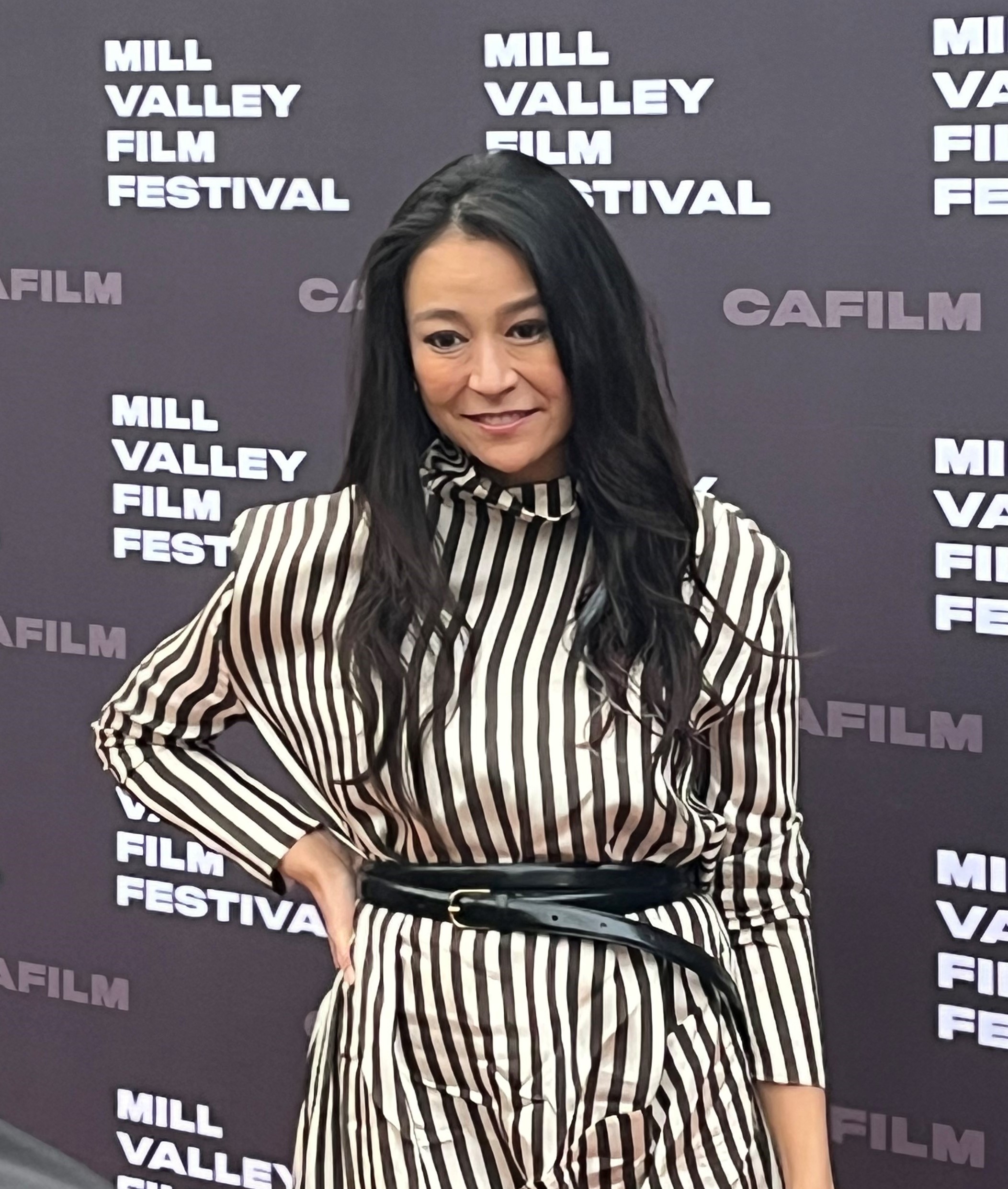
“In documentaries, your job is very much to be a listener,” she said. “You’re observing. You’re listening — and you’re supporting when you need to. You live through these crazy things with real-life people. You’re there with them and you are there for them. In narrative fiction, it’s the same but different. You have this amazing creative collaborator, who is working with you to create a performance, to conjure up this this real life experience and bring to life this role. In docs, you often feel like you are living in your little hole, that you are alone. Whereas in making a narrative film it’s a very collaborative process, and if I were really going to boil it down, in this case the big difference is Annette Bening and Jody Foster. You could not ask for better collaborators.”
Now that she and Jimmy have done this, will they do more narrative films, or are they back to documentaries?
“I love documentaries,” she said. “To me, a story is a story. I love the craft part of it, the editing, the words, which are pretty similar, but the resources are very different in narrative fiction. So we are working on two docs now. Then we’ll make another narrative film. We take great pleasure in all of it.”
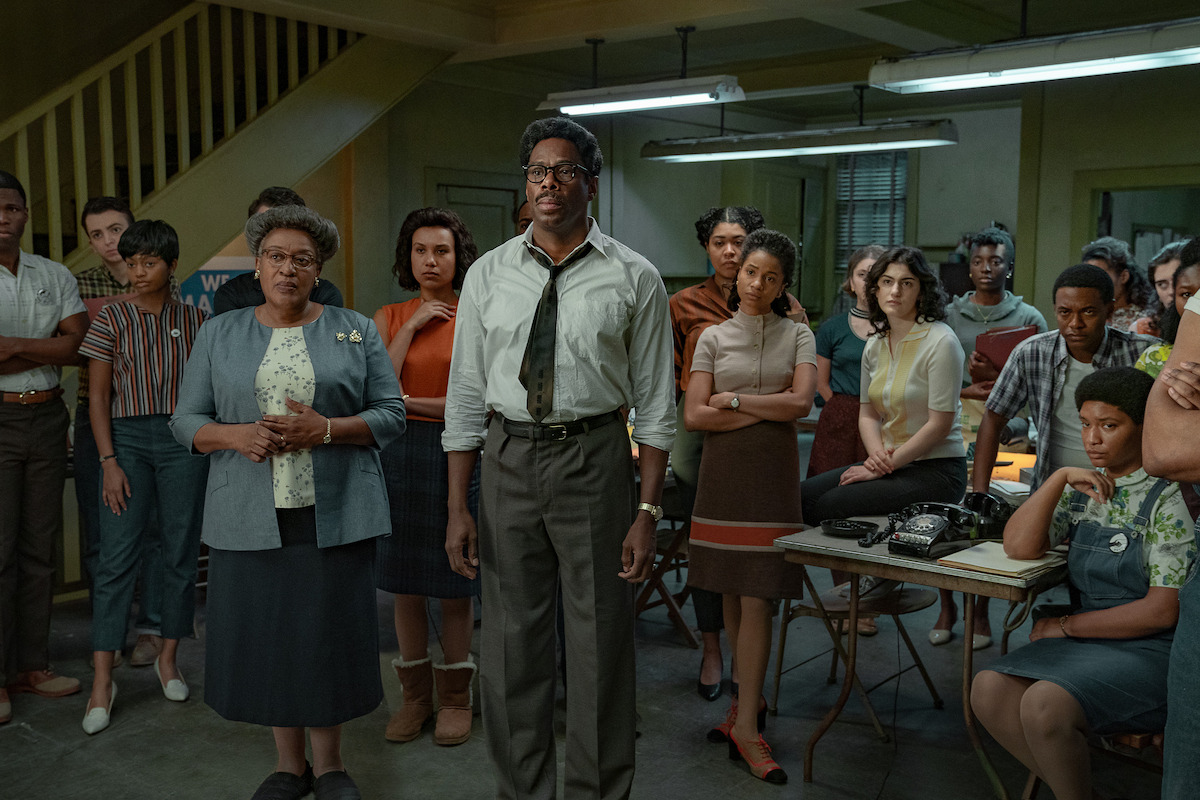
Rustin, written by Julian Breece and Dustin Lance Black, and helmed by legendary stage director-turned-filmmaker George C. Wolfe (Ma Rainey’s Black Bottom), is the story of civil rights warrior Bayard Rustin, who was the primary organizer of the history-changing March on Washington in 1963. Like Diana Nyad’s historic swim, Rustin primarily focuses on the details as Rustin (played with Oscar worthy brilliance by Colman Domingo) asembles a team to pull off what the organizers knew would be a historic event, bringing 100,000 people to Washington D.C. to rally for better jobs and equal rights for Black Americans.
Rustin, the man, has been largely sidelined by history, with figures like Martin Luther King, Jr., John Lewis, and Cleveland Robinson getting most of the credit for the march. The film Rustin — which features performances by Chris Rock, Aml Ameen, CCH Pounder, Audra McDonald, Da’Vine Joy Randolph and Jeffrey Wright — should help correct the record.
Carried primarilly by the magnificent, thunder-and-lightning performance of Domingo — who is widely being talked up as a shoo-in for a Best Actor nomination — the film presents Rustin as a force of nature, a skilled organizer, passionate communicator and unapologetically gay man who deserved better than he got from his own community, many of whom saw Rustin as a liability for his well-known (but not openly discussed) homosexuality.
The sheer magnitude of an event like the March on Washington is carefully shown as Rustin alternates between planning sessions with his team — figuring out how to feed so many people, provide restrooms and security, and even housing given the limited number of hotels that would accept Black people in Washinton D.C. at the time — with meetings in which he fights with other civil rights leaders to keep his job.
Films like Rustin are designed to be stirring, and this one certainly delivers on inspiration, ultimately offering a kind of reverse image of the message of Nyad. Sometimes when attempting to achieve a near-impossible task, an enormous team effort is only possible with the right person leading the way.

May December, directed by Todd Haynes (Far From Heaven) and written by Sammy Burch, is a dark (extrememly dark) comedy-drama featuring Natalie Portman as Elizabeth Barry, an actress researching her next movie role. The film she’s about to make is based on the sensational tabloid story of Gracie Atherton-Yoo (Julianne Moore), a 50-something homemaker and baker who is happily married (supposedly) to the 30-something Joe Yoo (Charles Melton), the man she once went to prison for having sex with — since they met when she was 34 and he was 13. After giving birth to their child while in jail, she later married him upon her release, and after 20 years together, they now have twins getting ready to graduate from high school. And though neighbors don’t mail boxes of dogshit to their house as often as they once did, they still do on occasion. Elizabeth discovers this when she knocks on the Yoo’s door for the first time, and thoughtfully brings the package into the barbecue being thrown to show how normal they are.
This uncomfortable first meeting sets the tone for the film, which gradually turns up the discomfort as Elizabeth digs deeper and deeper into the relationship of the people whose lives she’s about to expose. Their relationship, it turns out, is exactly what we thing it is, but also nothing like we assume. Teetering on the edge of Hitchcockian dread, scene by scene, Haynes and Burch explore the concept of crossing lines, and are lines ever crossed as this story moves, crawls, oozes, dances around and slimes its way to a memorably conflicted conclusion.
Todd Haynes’ direction is simultaneously restrained — as when he uses a single static shot, from the mirror’s POV in an edge-of-your-seat scene where Grace shows Elizabeth how she applies her makeup, but so much more than that happens — and excessive, as in his decision to use bombastic, horror-show music to underscore some of the films least dramatic moments, as when Grace expressionlessly studies the contents of the refrigerator. The music is the clearest indication that Haynes’ sees this all as a human comedy. Which it really is. But not the funny kind.
As for Oscars, Haynes, Portman and Moore are all past nominees and Moore is already being touted as a strong potential contender for best supporting actress for May December. Personally, I think Burch has a dark horse chance for best original screenplay.


 North Bay Stage and Screen